Get 69% Off on Cloud Hosting : Claim Your Offer Now!





- Products
- Solutions
-
Solutions
-
 Cloud
Hosting
Cloud
Hosting
-
VPS
Hosting
-
 GPU
Cloud
GPU
Cloud
-
 Dedicated
Server
Dedicated
Server
-
 Server
Colocation
Server
Colocation
-
 Backup as a Service
-
 CDN
Network
CDN
Network
-
 Window
Cloud Hosting
Window
Cloud Hosting
-
 Linux
Cloud Hosting
Linux
Cloud Hosting
-
Managed
Cloud Service
-
 Storage
as a Service
Storage
as a Service
-
VMware
Public Cloud
-
Multi-Cloud
Hosting
-
Cloud
Server Hosting
-
Bare
Metal Server
-
Virtual
Machine
-
 Magento
Hosting
Magento
Hosting
-
 Remote
Backup
Remote
Backup
-
 DevOps
-
 Kubernetes
-
 Cloud
Storage
Cloud
Storage
-
 NVMe
Hosting
NVMe
Hosting
-
 DR
as s Service
DR
as s Service
-
-
Solutions
- Marketplace
- Pricing
- Resources
- Company
 Remote
Backup
Remote
Backup NVMe
Hosting
NVMe
Hosting Pricing
Calculator
Pricing
Calculator Unlock Cost
Optimization
Unlock Cost
Optimization Overview
 Documentation
 Price
Calculator
Price
Calculator Tools
Tools FAQs
FAQs Terms
of Service
Terms
of Service Privacy
Policy
Privacy
Policy
 Migration
 Container
 Power
Power
 Utilities
 VMware
Private Cloud
VMware
Private Cloud VMware
on AWS
VMware
on AWS VMware
on Azure
VMware
on Azure Certifications
 Partners
 Careers
 Support
 Service
Level Agreement
Service
Level Agreement  Contact
Table of Contents
The Infrastructure Decision Every Growing Company Eventually Faces
There’s a moment in every scaling company’s journey when the server closet down the hall stops making sense. Maybe the cooling bill spiked. Maybe compliance auditors flagged the “data center” that’s really just a locked room with a window AC unit. Maybe the CFO asked why capital is tied up in generators nobody understands.
This is precisely the inflection point driving one of infrastructure’s most consistent growth stories: server colocation.
What is Server Colocation?
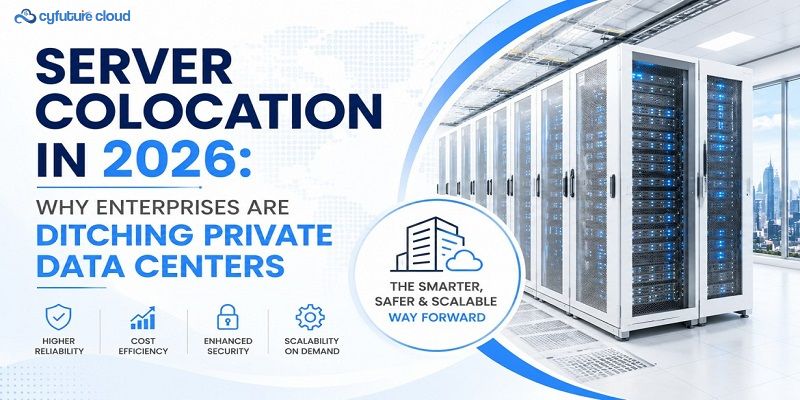
Server Colocation is a hosting model where a business owns its physical servers, storage, and networking equipment but houses that hardware in a third-party data center facility. The colocation provider supplies the physical space, redundant power, cooling infrastructure, network connectivity, and physical security, while the client retains full control over their hardware configuration, operating systems, and software stack. Businesses rent space, power, cooling, and connectivity within third-party data center facilities to host their own servers, storage, and networking equipment, allowing different enterprises to operate securely within a shared environment while maintaining infrastructure control.
The category is no longer a niche IT decision—it’s a boardroom conversation.
The Numbers Behind the Colocation Boom
Let’s start with scale, because the figures tell a compelling story.
The global data center colocation market size was estimated at USD 91.1 billion in 2025 and is projected to grow from USD 99.2 billion in 2026 to USD 184.4 billion by 2033, growing at a CAGR of 9.3%. Other market analysts peg 2026 figures even higher—the global market is estimated at USD 104.56 billion in 2026, expected to reach USD 241.46 billion by 2033, exhibiting a CAGR of 12.7%.
Regionally, North America dominates with an estimated 36.8% market share in 2026, driven largely by hyperscale tenants and enterprise migration away from on-premises facilities.
Here’s what’s fueling this surge:
Enterprises are exiting captive server rooms because third-party halls now shoulder the large capital outlays and intricate engineering required for AI-scale computing. Providers who pre-install liquid-cooling loops, reserve medium-voltage utility feeds, and guarantee certified staff monetize this shift through long-term leases struck well before construction even begins.
Why Server Colocation Beats Building Your Own Data Center
The math is straightforward once you break it down.
Capital Efficiency: Building a Tier III facility from scratch requires millions in upfront capital for power redundancy, HVAC systems, fire suppression, and physical security—costs a colocation provider has already absorbed and amortized across hundreds of tenants.
Compliance Coverage: Facilities are typically pre-certified for ISO 27001, SOC 2, and industry-specific frameworks (PCI-DSS, HIPAA), removing months of audit preparation from your timeline.
Power Reliability: Rising data center costs and the need for reliable power and cooling are cited as primary market drivers—precisely the operational burden colocation removes from in-house IT teams.
Segment Reality Check: By colocation type, the retail colocation segment led the market with the largest revenue share of 69.2% in 2025, and by tier level, the Tier 3 segment led with 58.8% revenue share—confirming that most enterprises want proven, mid-tier reliability rather than bleeding-edge (and expensive) Tier IV builds.
The AI Factor: Colocation’s New Growth Engine
Server colocation in 2026 looks structurally different from five years ago because of one force: AI workloads.
AI-driven compute infrastructure is the key growth driver, necessitating high-density, AI-ready facilities, while power scarcity restricts growth, creating opportunity in regions with better grid access. This has pushed colocation providers to redesign facilities around liquid cooling, higher rack densities, and dedicated power feeds for GPU clusters.
A telling example: in May 2026, Digi Power X announced a long-term colocation agreement with Cerebras Systems to develop a purpose-built 40 MW AI data center campus in Alabama, a deal designed to support large-scale AI computing workloads requiring substantial power capacity and advanced infrastructure.
Primary markets in the US, UK, Germany, and Singapore are experiencing near-historic low vacancy rates, pushing secondary and emerging markets to absorb development activity redirected by primary market constraints—which is exactly why markets like India are seeing accelerated colocation investment.
What Enterprises Should Evaluate Before Signing
Technical due diligence for server colocation should cover:
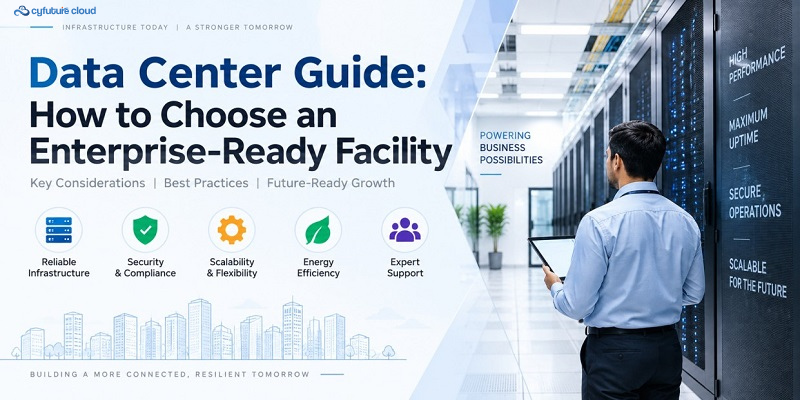
Power redundancy design (N+1 vs. 2N configurations), carrier-neutral connectivity (multiple ISPs and direct cloud on-ramps), rack density support (can the facility handle 15-30kW+ for GPU deployments), compliance certifications relevant to your industry, and remote hands availability for after-hours hardware issues.
The Large Enterprise segment is expected to account for 64.2% share of the global data center colocation market in 2026, owing to critical IT infrastructure requirements—but SMEs and startups increasingly use colocation too, often starting with quarter-rack deployments before scaling.
Cyfuture Cloud’s Position in the Colocation Landscape
Cyfuture Cloud operates Tier III-aligned colocation facilities built specifically for the hybrid reality enterprises now navigate—owned hardware sitting alongside cloud-native workloads. Two data points stand out: Cyfuture Cloud maintains a 99.95% uptime commitment backed by N+1 redundant power architecture, and its facilities support direct low-latency interconnects to major public cloud platforms, letting colocated servers participate in hybrid architectures without expensive dedicated leased lines.
For enterprises weighing whether to colocate domestically or with global players, that combination of compliance readiness, power resilience, and cloud interconnection is increasingly the deciding factor.
Making the Colocation Decision in 2026
Server colocation isn’t simply cheaper real estate for your servers—it’s outsourced engineering expertise for the hardest parts of running infrastructure: power, cooling, connectivity, and physical security. As AI workloads push power and cooling requirements higher, that expertise gap between DIY data centers and specialized colocation facilities will only widen.
The organizations moving fastest in 2026 aren’t asking whether to colocate—they’re asking which facility can support their density requirements for the next five years.




Stay Ahead of the Curve.
Join the Cloud Movement, today!
Send this to a friend