Get 69% Off on Cloud Hosting : Claim Your Offer Now!





- Products
- Solutions
-
Solutions
-
 Cloud
Hosting
Cloud
Hosting
-
VPS
Hosting
-
 GPU
Cloud
GPU
Cloud
-
 Dedicated
Server
Dedicated
Server
-
 Server
Colocation
Server
Colocation
-
 Backup as a Service
-
 CDN
Network
CDN
Network
-
 Window
Cloud Hosting
Window
Cloud Hosting
-
 Linux
Cloud Hosting
Linux
Cloud Hosting
-
Managed
Cloud Service
-
 Storage
as a Service
Storage
as a Service
-
VMware
Public Cloud
-
Multi-Cloud
Hosting
-
Cloud
Server Hosting
-
Bare
Metal Server
-
Virtual
Machine
-
 Magento
Hosting
Magento
Hosting
-
 Remote
Backup
Remote
Backup
-
 DevOps
-
 Kubernetes
-
 Cloud
Storage
Cloud
Storage
-
 NVMe
Hosting
NVMe
Hosting
-
 DR
as s Service
DR
as s Service
-
-
Solutions
- Marketplace
- Pricing
- Resources
- Company
 Remote
Backup
Remote
Backup NVMe
Hosting
NVMe
Hosting Pricing
Calculator
Pricing
Calculator Unlock Cost
Optimization
Unlock Cost
Optimization Overview
 Documentation
 Price
Calculator
Price
Calculator Tools
Tools FAQs
FAQs Terms
of Service
Terms
of Service Privacy
Policy
Privacy
Policy
 Migration
 Container
 Power
Power
 Utilities
 VMware
Private Cloud
VMware
Private Cloud VMware
on AWS
VMware
on AWS VMware
on Azure
VMware
on Azure Certifications
 Partners
 Careers
 Support
 Service
Level Agreement
Service
Level Agreement  Contact
Table of Contents
Artificial intelligence (AI) is transforming industries, from healthcare and finance to manufacturing and technology. As businesses develop advanced AI applications, the demand for high-performance computing continues to grow. However, purchasing powerful GPU infrastructure requires significant capital investment, technical expertise, and ongoing maintenance. This is where GPU rental services offer a practical alternative.
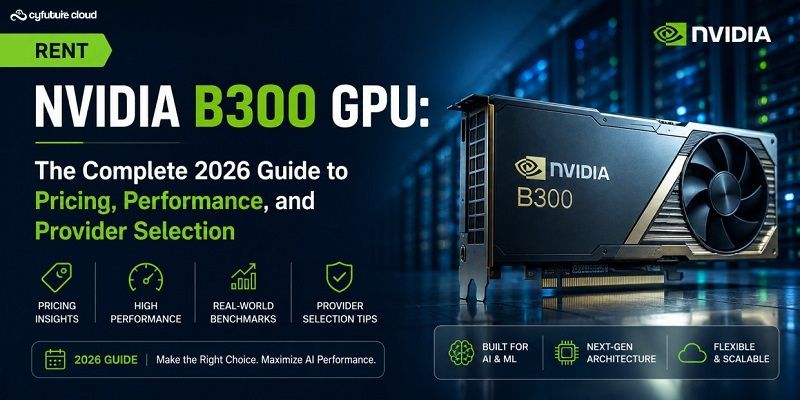
The NVIDIA B300 GPU, powered by the Blackwell Ultra architecture, is designed for demanding AI workloads, including large language model training, AI reasoning, and high-performance inference. Each B300 GPU offers up to 288 GB of HBM3e memory and up to 8 TB/s of memory bandwidth. These capabilities support complex AI workloads that require substantial computing power. Businesses can access this technology through specialized GPU rental services without purchasing the hardware outright.
What Is NVIDIA B300 GPU Rental?
NVIDIA B300 GPU rental is a service that allows businesses to access high-performance GPU computing resources for a specified period. Instead of purchasing expensive hardware, organizations can rent GPU-powered servers from cloud providers or specialized infrastructure companies.
The NVIDIA B300 belongs to the Blackwell Ultra GPU family. It is designed to support demanding AI workloads, including model training, inference, and advanced reasoning applications.
Businesses can use rented B300 GPU infrastructure for:
- Large language model (LLM) training and inference.
- Generative AI application development.
- AI research and experimentation.
- High-performance computing (HPC).
- Data processing and deep learning.
With a rental model, organizations can access computing resources based on their workload requirements.
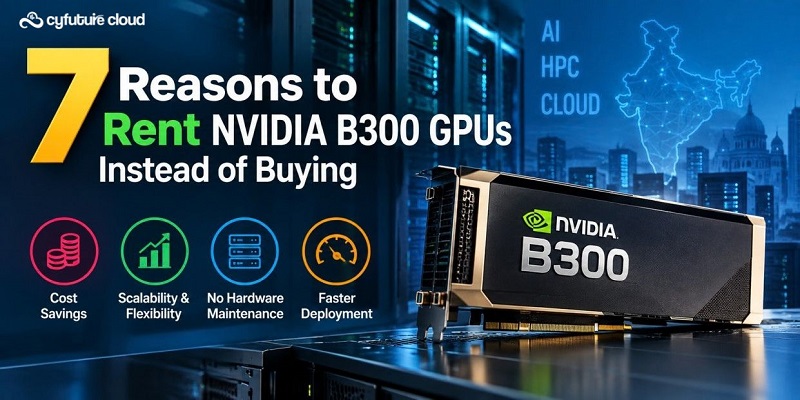
7 Reasons to Rent NVIDIA B300 GPUs Instead of Buying
1. Reduce Initial Capital Investment
Purchasing NVIDIA B300 GPU infrastructure requires a substantial upfront investment. In addition to the GPUs, businesses must consider server components, networking equipment, power infrastructure, and cooling systems.
For startups and growing businesses, these expenses can put pressure on budgets.
When you rent NVIDIA B300 GPU resources, you pay for access to computing infrastructure rather than purchasing the entire system.
Key benefits:
- Lower upfront infrastructure costs.
- Reduced capital expenditure.
- More predictable infrastructure budgeting.
- Greater flexibility in allocating funds to business growth.
As a result, businesses can access advanced AI computing without committing a large amount of capital to hardware ownership.
2. Scale Computing Resources as Needed
AI workloads can change significantly over time. A business may require a few GPUs during development and much greater computing capacity during model training or production deployment.
Purchasing hardware for peak demand can leave resources underutilized during quieter periods.
GPU rental services provide greater flexibility by allowing businesses to adjust their computing resources according to workload requirements.
For example, an AI startup can rent additional B300 GPU capacity for a model training project and reduce its usage after the project ends.
Key benefits:
- Flexible computing capacity.
- Easier workload expansion.
- Reduced risk of purchasing excess hardware.
- Better alignment between computing resources and business demand.
This approach helps businesses manage changing AI workloads more efficiently.
3. Access Advanced AI Computing Technology
The NVIDIA B300 GPU is designed for advanced AI workloads that require substantial computing power and memory capacity.
Each Blackwell Ultra GPU offers up to 288 GB of HBM3e memory and up to 8 TB/s of memory bandwidth. These specifications support demanding AI workloads, including large-model inference and advanced reasoning.
However, purchasing the latest GPU hardware may not be practical for every organization.
Renting NVIDIA B300 GPUs allows businesses to access advanced computing infrastructure without taking direct ownership of the hardware.
Key benefits:
- Access to advanced GPU architecture.
- Support for demanding AI workloads.
- Reduced need for hardware procurement.
- Greater flexibility when evaluating new technologies.
This makes GPU rental a practical option for businesses exploring next-generation AI applications.
4. Reduce Hardware Maintenance Responsibilities
Owning GPU infrastructure involves more than purchasing hardware. Businesses must also manage equipment maintenance, hardware monitoring, cooling, power delivery, and infrastructure upgrades.
These responsibilities can require dedicated technical teams and additional operating expenses.
When businesses rent GPU resources from a provider, the provider typically manages the underlying infrastructure, depending on the service agreement.
This allows internal teams to focus more on AI development and application deployment.
Key benefits:
- Reduced hardware management responsibilities.
- Less need for dedicated infrastructure maintenance.
- Lower operational complexity.
- More time for development and innovation.
However, customers should review the provider’s support terms to understand which responsibilities remain with them.
5. Avoid Data Center Infrastructure Costs
High-performance GPU systems require specialized infrastructure to operate reliably. This includes sufficient electrical capacity, cooling systems, network connectivity, and physical security.
Building an in-house GPU data center can involve significant installation and operating expenses.
Businesses that rent NVIDIA B300 GPUs can access infrastructure hosted in a professionally managed data center.
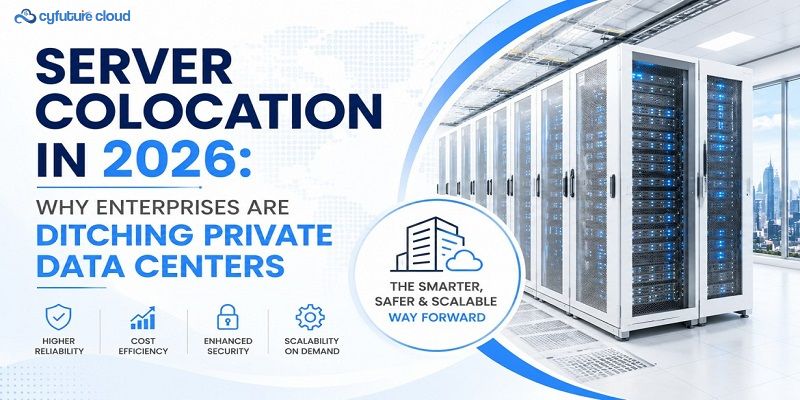
Alternatively, organizations that own their hardware can consider Server Colocation, where they place their equipment in a third-party facility that provides power, cooling, connectivity, and physical security.
Key benefits of GPU rental:
- No need to build a dedicated GPU facility.
- Reduced responsibility for power and cooling infrastructure.
- Access to professionally managed environments.
- Lower infrastructure setup complexity.
The right approach depends on whether a business prefers renting computing resources or maintaining ownership of its hardware.
6. Deploy AI Projects Faster
Purchasing GPU hardware can involve vendor selection, procurement, delivery, installation, configuration, and testing.
These steps may delay AI development projects.
GPU rental services can simplify deployment by providing access to preconfigured computing environments. Depending on availability and provider processes, businesses may be able to start using rented resources much sooner than they could deploy newly purchased infrastructure.
Key benefits:
- Faster access to computing resources.
- Reduced hardware procurement delays.
- Simplified infrastructure deployment.
- Quicker experimentation and development.
For businesses working with tight project deadlines, faster access to GPU infrastructure can help streamline development.
7. Improve Budget Flexibility and Manage Financial Risk
AI technology continues to evolve, and computing requirements can change as models, applications, and business strategies develop.
Purchasing expensive GPU infrastructure creates a long-term financial commitment. Hardware may eventually require upgrades or replacement as workloads change.
Renting NVIDIA B300 GPUs offers an alternative by allowing businesses to choose rental periods and resource configurations based on their needs.
Key benefits:
- More flexible infrastructure spending.
- Reduced exposure to hardware ownership costs.
- Easier experimentation with new AI workloads.
- Greater freedom to adjust infrastructure plans.
However, long-term rental costs can exceed ownership costs in some situations. Businesses should compare total expenses over their expected usage period before making a decision.
Rent NVIDIA B300 GPU vs. Buying: A Quick Comparison
|
Factor |
Renting NVIDIA B300 GPUs |
Buying NVIDIA B300 GPUs |
|
Initial investment |
Lower upfront commitment |
High upfront investment |
|
Maintenance |
Often managed by the provider |
Managed by the owner |
|
Scalability |
Flexible, subject to availability |
Requires additional hardware |
|
Infrastructure |
Usually provided by the rental company |
Requires owned or colocated infrastructure |
|
Deployment |
Potentially faster |
Requires procurement and installation |
|
Long-term costs |
Recurring rental payments |
Hardware and operating expenses |
|
Hardware ownership |
No |
Yes |
The actual costs and responsibilities depend on the provider, hardware configuration, contract terms, and deployment model.
Who Should Rent NVIDIA B300 GPUs?
Renting NVIDIA B300 GPUs can be useful for organizations that need advanced computing resources without purchasing and maintaining their own infrastructure.
Typical users include:
- AI startups: Access advanced GPU resources while managing initial investment.
- Research institutions: Support demanding AI research and experimentation.
- Enterprise businesses: Run AI training and inference workloads.
- Software developers: Build and test AI applications.
- Data science teams: Process large datasets and develop machine learning models.
Organizations with continuous, predictable workloads may also evaluate purchasing hardware or using Server Colocation.
Conclusion
Renting NVIDIA B300 GPUs instead of buying can help businesses access advanced AI computing while reducing upfront investment and infrastructure management responsibilities.
From flexible scalability and faster deployment to reduced hardware maintenance, GPU rental offers several advantages for organizations developing AI applications.
However, the right choice depends on workload requirements, budget, expected usage duration, and infrastructure capabilities.
Before selecting a provider, businesses should compare pricing, GPU availability, network performance, technical support, and security features.
By evaluating these factors, organizations can choose a computing model that aligns with their AI goals and long-term infrastructure strategy.





Stay Ahead of the Curve.
Join the Cloud Movement, today!
Send this to a friend