Get 69% Off on Cloud Hosting : Claim Your Offer Now!





- Products
- Solutions
-
Solutions
-
 Cloud
Hosting
Cloud
Hosting
-
VPS
Hosting
-
 GPU
Cloud
GPU
Cloud
-
 Dedicated
Server
Dedicated
Server
-
 Server
Colocation
Server
Colocation
-
 Backup as a Service
-
 CDN
Network
CDN
Network
-
 Window
Cloud Hosting
Window
Cloud Hosting
-
 Linux
Cloud Hosting
Linux
Cloud Hosting
-
Managed
Cloud Service
-
 Storage
as a Service
Storage
as a Service
-
VMware
Public Cloud
-
Multi-Cloud
Hosting
-
Cloud
Server Hosting
-
Bare
Metal Server
-
Virtual
Machine
-
 Magento
Hosting
Magento
Hosting
-
 Remote
Backup
Remote
Backup
-
 DevOps
-
 Kubernetes
-
 Cloud
Storage
Cloud
Storage
-
 NVMe
Hosting
NVMe
Hosting
-
 DR
as s Service
DR
as s Service
-
-
Solutions
- Marketplace
- Pricing
- Resources
- Company
 Remote
Backup
Remote
Backup NVMe
Hosting
NVMe
Hosting Pricing
Calculator
Pricing
Calculator Unlock Cost
Optimization
Unlock Cost
Optimization Overview
 Documentation
 Price
Calculator
Price
Calculator Tools
Tools FAQs
FAQs Terms
of Service
Terms
of Service Privacy
Policy
Privacy
Policy
 Migration
 Container
 Power
Power
 Utilities
 VMware
Private Cloud
VMware
Private Cloud VMware
on AWS
VMware
on AWS VMware
on Azure
VMware
on Azure Certifications
 Partners
 Careers
 Support
 Service
Level Agreement
Service
Level Agreement  Contact
Table of Contents
- Why GPU Demand Is Exploding in 2026
- Rent GPU vs Data Center Colocation: Understanding the Difference
- Benefits of Renting GPU in 2026
- What Is Data Center Colocation?
- Advantages of Data Center Colocation
- GPU Rental vs Colocation: Which One Should You Choose?
- How Cyfuture Cloud Supports GPU-Driven Innovation
- The Future of GPU Infrastructure in 2026 and Beyond
- Conclusion
Artificial Intelligence (AI), machine learning (ML), generative AI, and high-performance computing are changing the way businesses build digital infrastructure. But here is the challenge: advanced GPU hardware has become expensive, power-hungry, and difficult to manage.
So, what should enterprises, developers, and AI teams choose in 2026?
Should they rent GPU resources on demand, or invest in data center colocation with dedicated hardware?
The answer depends on workload requirements, scalability needs, budget, and long-term infrastructure strategy.
In this guide, we will break down GPU rentals vs data center colocation, compare their advantages, and help technology leaders make the right decision.
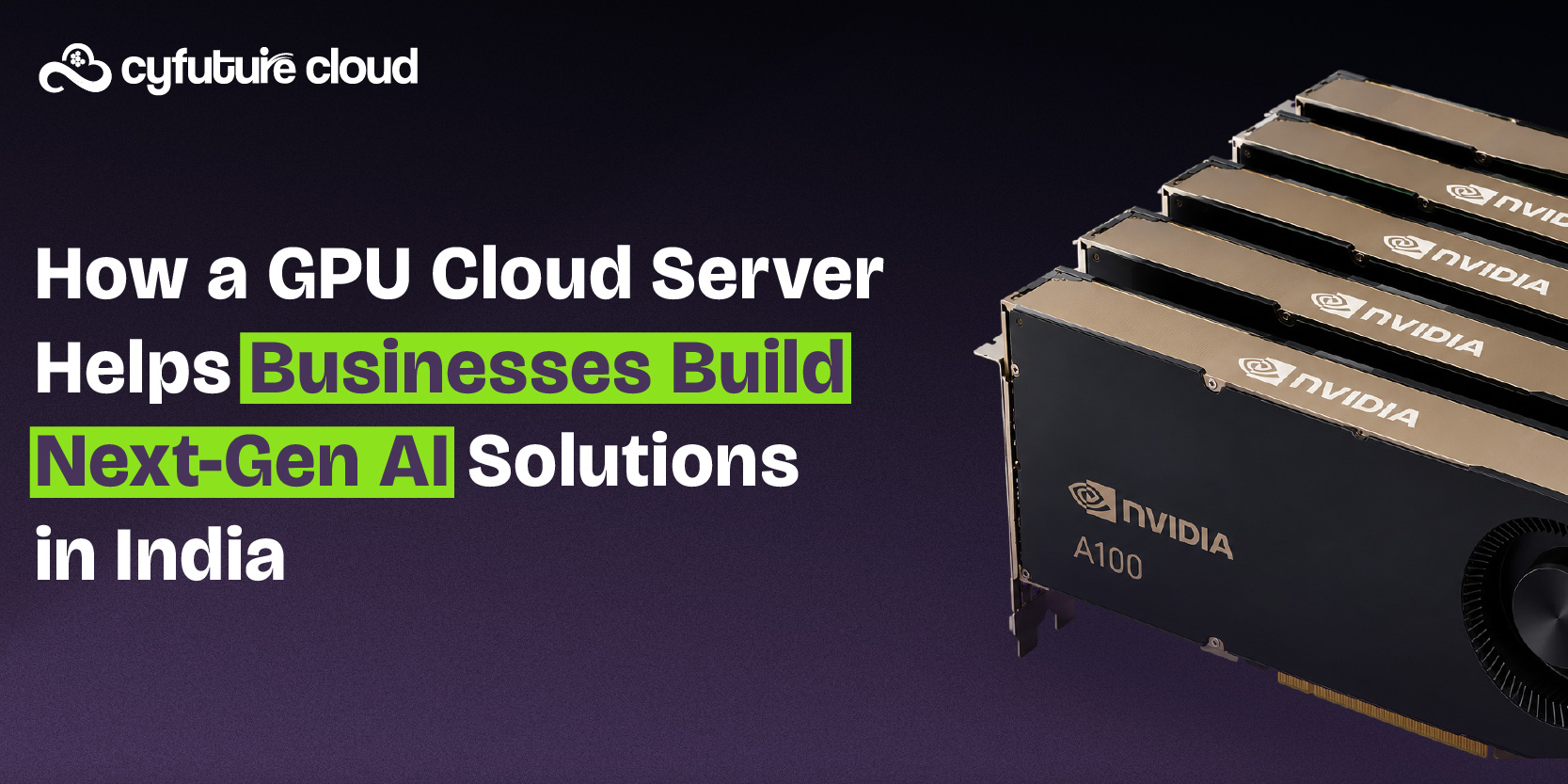
GPU rentals allow users to access powerful processors like NVIDIA H100, H200, and other AI-focused GPUs for:
- AI model training
- Large language model (LLM) development
- Data analytics
- Scientific simulations
- Video processing
- Deep learning workloads
Instead of spending millions on GPU infrastructure, organizations can use GPU resources when required.
Why GPU Demand Is Exploding in 2026
The AI revolution has created unprecedented demand for GPU computing.
According to NVIDIA, modern AI workloads require massive parallel processing capabilities, making GPUs essential for training and running advanced AI models.
Some key market indicators:
- The global AI infrastructure market continues rapid expansion due to generative AI adoption.
- NVIDIA’s data center business has become one of its fastest-growing segments because enterprises are investing heavily in AI compute.
- Modern AI models require thousands of GPU hours for training and inference.
The reality?
GPU infrastructure is no longer just for research labs. Today, startups, enterprises, universities, and developers all need flexible access to accelerated computing.
That is where GPU rental becomes a practical solution.
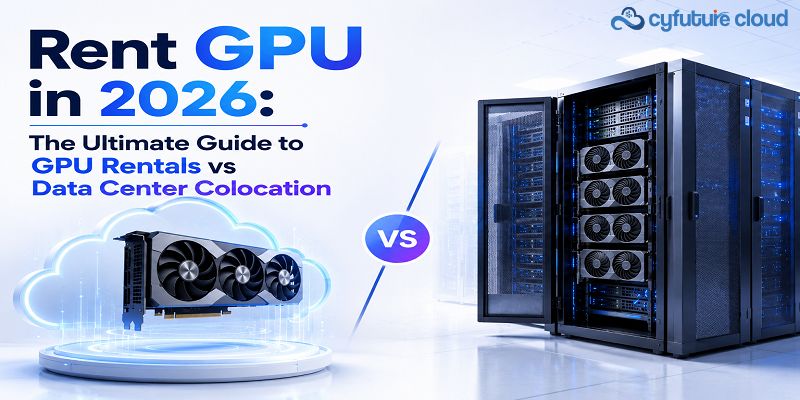
Rent GPU vs Data Center Colocation: Understanding the Difference
Before choosing an infrastructure model, it is important to understand how both approaches work.
|
Factor |
Rent GPU |
Data Center Colocation |
|
Hardware Ownership |
Provider owns GPUs |
Customer owns hardware |
|
Initial Investment |
Low |
High |
|
Scalability |
Instant scaling |
Requires hardware planning |
|
Maintenance |
Managed by provider |
Customer responsibility |
|
Deployment Speed |
Minutes to hours |
Weeks/months |
|
Best For |
AI workloads, testing, short-term projects |
Long-term infrastructure control |
Benefits of Renting GPU in 2026
1. Lower Capital Investment
Buying enterprise GPUs requires significant upfront spending.
A single high-end AI GPU server can cost thousands of dollars, while complete AI clusters can require millions in investment.
With GPU rental:
- No hardware purchase
- No depreciation costs
- No maintenance expenses
- Predictable operational spending
This makes AI accessible for startups, developers, and enterprises.
2. Faster AI Development
AI innovation moves quickly.
A model that needs thousands of GPU hours today may require different infrastructure tomorrow.
GPU rental allows teams to:
- Launch AI projects quickly
- Experiment with different GPU configurations
- Scale resources during peak workloads
Developers can focus on building applications instead of managing hardware.
3. Access to Latest GPU Technology
GPU generations evolve rapidly.
Companies investing in physical hardware risk technology becoming outdated.
GPU rental platforms allow access to newer accelerators without replacing infrastructure every few years.
Popular AI GPUs include:
- NVIDIA H100
- NVIDIA H200
- NVIDIA A100
These GPUs are designed for:
- Large language models
- AI inference
- Deep learning
- High-performance computing
What Is Data Center Colocation?
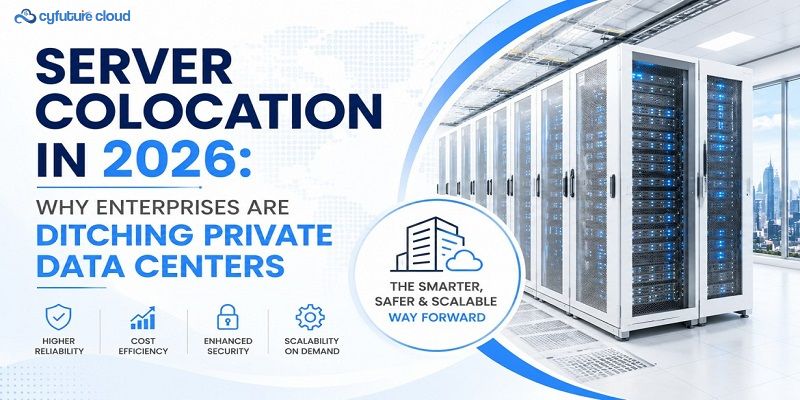
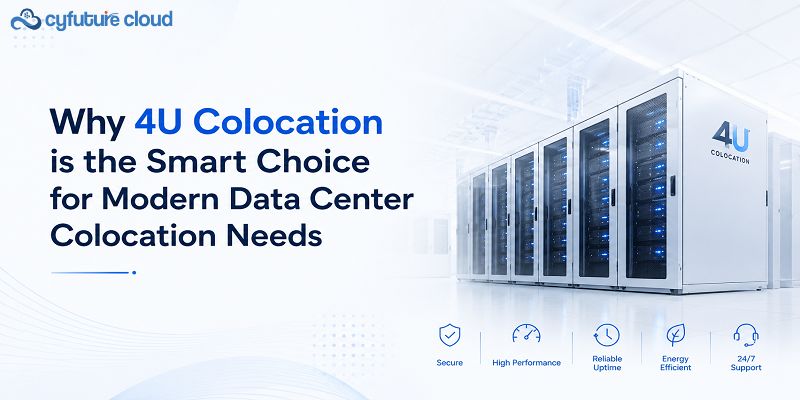
Data center colocation means placing privately owned servers and hardware inside a professional data center facility.
Instead of building and maintaining a private data center, companies rent space, power, cooling, connectivity, and security from a colocation provider.
Colocation typically provides:
- Dedicated rack space
- Enterprise networking
- Physical security
- Power redundancy
- Cooling infrastructure
Advantages of Data Center Colocation
1. Complete Hardware Control
Organizations that require complete control over their infrastructure often choose colocation.
Benefits include:
- Custom hardware configurations
- Dedicated environments
- Full control over software stacks
2. Better Long-Term Economics
For predictable workloads running continuously for years, owning hardware in a colocation facility can become cost-effective.
Examples:
- Private cloud infrastructure
- Enterprise databases
- Compliance-driven workloads
GPU Rental vs Colocation: Which One Should You Choose?
The right option depends on your business needs.
Choose GPU rental if you need:
✓ Flexible AI computing
✓ Quick deployment
✓ Experimental workloads
✓ Short-term scaling
✓ Reduced infrastructure costs
Choose data center colocation if you need:
✓ Dedicated hardware ownership
✓ Long-term infrastructure control
✓ Custom networking
✓ Predictable workloads
Many enterprises are adopting a hybrid approach — combining rented GPU capacity with colocation environments.
How Cyfuture Cloud Supports GPU-Driven Innovation
Cyfuture Cloud helps organizations access scalable cloud infrastructure designed for modern computing requirements.
With high-performance infrastructure, enterprise-grade data centers, and flexible deployment options, Cyfuture Cloud enables businesses to accelerate AI development without heavy hardware investment.
Key advantages include:
- Scalable GPU infrastructure for AI/ML workloads
- Reliable enterprise cloud environment
- Secure and optimized data center facilities
Cyfuture Cloud’s infrastructure approach helps businesses focus on innovation while reducing operational complexity.
The Future of GPU Infrastructure in 2026 and Beyond
The future is moving toward flexible computing.
AI workloads are becoming:
- Larger
- More complex
- More distributed
Organizations will increasingly combine:
- GPU rentals for flexibility
- Colocation for control
- Cloud platforms for scalability
The winning strategy will not be owning the most hardware.
It will be accessing the right computing power at the right time.
Conclusion
In 2026, choosing between rent GPU services and data center colocation depends on workload requirements, financial strategy, and scalability goals.
GPU rental provides speed, flexibility, and access to advanced AI hardware without massive investment.
Data center colocation provides control, ownership, and long-term infrastructure stability.
For AI startups, developers, researchers, and enterprises, GPU rental is becoming one of the fastest ways to access next-generation computing power.
With providers like Cyfuture Cloud offering scalable cloud solutions, organizations can build, test, and deploy AI innovations faster than ever.

Stay Ahead of the Curve.
Join the Cloud Movement, today!
Send this to a friend