Get 69% Off on Cloud Hosting : Claim Your Offer Now!





- Products
- Solutions
-
Solutions
-
 Cloud
Hosting
Cloud
Hosting
-
VPS
Hosting
-
 GPU
Cloud
GPU
Cloud
-
 Dedicated
Server
Dedicated
Server
-
 Server
Colocation
Server
Colocation
-
 Backup as a Service
-
 CDN
Network
CDN
Network
-
 Window
Cloud Hosting
Window
Cloud Hosting
-
 Linux
Cloud Hosting
Linux
Cloud Hosting
-
Managed
Cloud Service
-
 Storage
as a Service
Storage
as a Service
-
VMware
Public Cloud
-
Multi-Cloud
Hosting
-
Cloud
Server Hosting
-
Bare
Metal Server
-
Virtual
Machine
-
 Magento
Hosting
Magento
Hosting
-
 Remote
Backup
Remote
Backup
-
 DevOps
-
 Kubernetes
-
 Cloud
Storage
Cloud
Storage
-
 NVMe
Hosting
NVMe
Hosting
-
 DR
as s Service
DR
as s Service
-
-
Solutions
- Marketplace
- Pricing
- Resources
- Company
 Remote
Backup
Remote
Backup NVMe
Hosting
NVMe
Hosting Pricing
Calculator
Pricing
Calculator Unlock Cost
Optimization
Unlock Cost
Optimization Overview
 Documentation
 Price
Calculator
Price
Calculator Tools
Tools FAQs
FAQs Terms
of Service
Terms
of Service Privacy
Policy
Privacy
Policy
 Migration
 Container
 Power
Power
 Utilities
 VMware
Private Cloud
VMware
Private Cloud VMware
on AWS
VMware
on AWS VMware
on Azure
VMware
on Azure Certifications
 Partners
 Careers
 Support
 Service
Level Agreement
Service
Level Agreement  Contact
Table of Contents
- 1. Unmatched Computational Power for AI and Deep Learning
- 2. Exclusive Resource Allocation and Scalability
- 3. High-Speed Data Access and Storage
- 4. Enhanced Security and Compliance
- 5. Reliability and Uptime
- 6. Cost-Effectiveness for Large-Scale AI Projects
- 7. Specialized Hardware for AI Acceleration
- Industry Trends and Real-World Impact
- In summary:
Artificial intelligence (AI) and GPU-accelerated workloads have become the backbone of modern innovation, powering everything from real-time analytics and autonomous vehicles to advanced recommendation engines and large-scale language models. To fully unlock the potential of these compute-intensive technologies, choosing the right infrastructure is no longer optional—it’s mission-critical.
Dedicated servers remain the gold standard for organizations running high-performance AI environments. Whether deploying Windows Dedicated Servers for applications that rely on Microsoft’s ecosystem or opting for a Linux Dedicated Server to leverage the stability, flexibility, and open-source capabilities of Linux, these architectures deliver the raw compute power, low latency, and deep configurability required for complex AI lifecycles. Their isolated, single-tenant nature ensures a secure and reliable environment tailored for heavy workloads like model training, simulation, and massive parallel processing.
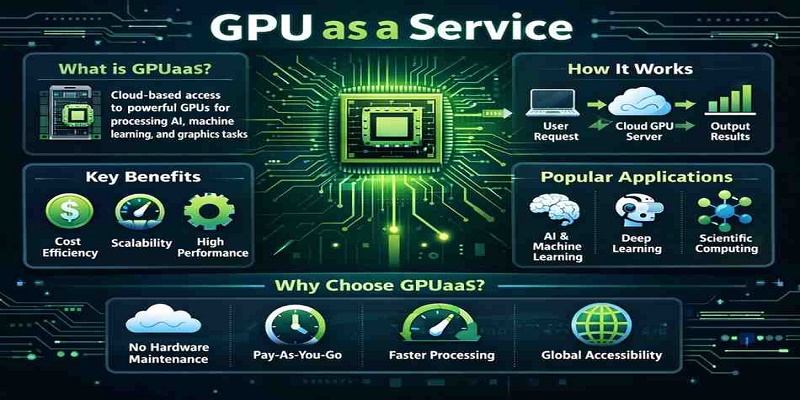
For workloads requiring extreme parallelism and advanced computing capability, a GPU Cloud Server adds another dimension of performance. With optimized GPU cores designed explicitly for AI and machine learning, GPU cloud platforms accelerate model training, inference, deep learning, and large-scale data processing at a speed far surpassing traditional CPU-based systems. They also provide scalable on-demand resources, making them ideal for burst workloads, research labs, and enterprises experimenting with new AI models.
In today’s rapidly evolving digital landscape, the combination of powerful dedicated servers and GPU-accelerated cloud infrastructure empowers businesses to achieve groundbreaking results. From supporting high-performance neural networks to enabling distributed AI pipelines, these solutions provide the precision, reliability, and future-ready capabilities needed to drive innovation forward.
1. Unmatched Computational Power for AI and Deep Learning
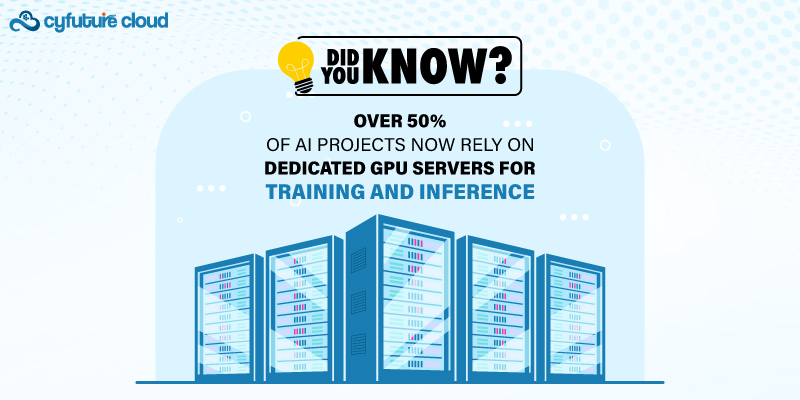
- AI model training and inference require immense processing power. Dedicated servers, especially those equipped with high-performance GPUs, deliver the raw computational muscle needed to handle complex algorithms and massive datasets. For example, the AI hardware market—driven largely by GPU-accelerated dedicated servers—was valued at $17 billion in 2022 and is projected to reach $89 billion by 2030, growing at a CAGR of 23.5%.
- Real-time applications demand ultra-low latency. Industries such as autonomous vehicles and financial trading require response times under 10 milliseconds. Only dedicated servers, with exclusive access to hardware, can consistently meet these stringent requirements.
2. Exclusive Resource Allocation and Scalability
- No resource contention: Unlike shared or virtualized environments, dedicated servers provide exclusive access to CPU, GPU, RAM, and storage. This ensures that AI workloads are not slowed down by other tenants, maximizing throughput and consistency.
- Scalability: As AI projects grow, so do their computational needs. Dedicated servers can be easily scaled—by adding more GPUs, memory, or storage—to accommodate larger models or increased data volumes without performance bottlenecks.
3. High-Speed Data Access and Storage
- Fast data retrieval: AI and machine learning (ML) applications often process terabytes of data. Dedicated servers, equipped with SSDs and RAID configurations, guarantee rapid data access and high I/O throughput, which is crucial for both training and inference phases.
- Efficient data management: The ability to handle extensive datasets efficiently is a key advantage, ensuring that data pipelines remain unblocked and AI cloud models can be trained or deployed without delay.
4. Enhanced Security and Compliance
- Data privacy: AI workloads frequently involve sensitive or proprietary data. Dedicated servers offer robust security features—such as encryption, firewalls, and intrusion detection—that help organizations meet regulatory requirements and protect intellectual property.
- Controlled access: With full control over the server environment, businesses can implement custom security policies, further reducing the risk of breaches or unauthorized data access.
5. Reliability and Uptime
- Mission-critical AI applications require continuous availability. Dedicated servers are renowned for their high reliability, with enterprise-grade hardware and 24/7 monitoring minimizing downtime and ensuring consistent performance.
- Dedicated support: Many providers offer specialized technical support for dedicated server customers, which is vital for troubleshooting and optimizing AI workloads.
6. Cost-Effectiveness for Large-Scale AI Projects
- Long-term savings: While the initial investment in dedicated servers may be higher than shared or virtualized solutions, the long-term benefits—resource optimization, reduced downtime, and elimination of overhead costs—make them more cost-effective for resource-intensive AI and GPU workloads.
- 48% of enterprises adopting AI have shifted to dedicated servers due to the improved performance and reliability over shared cloud resources.
7. Specialized Hardware for AI Acceleration
- Multi-GPU setups: Dedicated servers can be configured with multiple GPUs, deep learning-optimized processors, and high-bandwidth interconnects, catering specifically to the needs of AI and ML workloads.
- Customizable environments: Organizations can tailor server configurations to match the exact requirements of their AI projects, from memory and storage to networking and security.
Industry Trends and Real-World Impact
- AI adoption is accelerating across sectors, and dedicated servers are at the heart of this transformation. From healthcare and finance to manufacturing and entertainment, organizations are leveraging dedicated infrastructure to deploy smarter, faster, and more reliable AI solutions.
- Performance benchmarks consistently show that dedicated servers outperform shared and virtualized environments in both training speed and inference latency for deep learning models.
In summary:
Dedicated servers are not just an option—they are a necessity for organizations serious about AI and GPU as a Service accelerated workloads. They provide the horsepower, security, and reliability required to unlock the full potential of artificial intelligence, ensuring that businesses stay ahead in the era of intelligent automation.
Recent Post




Stay Ahead of the Curve.
Join the Cloud Movement, today!
Send this to a friend